Restaurant Leadership: Stronger Leaders Build Stronger Teams
I was 20 years old, an assistant manager at a fast food restaurant, sitting down for lunch after a stressful shift.
One of my employees walked over and asked, "Everything alright?"
I was surprised. "Yeah... why?"
She looked down at my tray. "You got the bacon cheeseburger instead of the grilled chicken sandwich today."
We both burst out laughing because she was absolutely right. Without realizing it, I only ordered the bacon cheeseburger on stressful days.
That moment stuck with me for years because it taught me something important: Your team notices more than you think. Your tone. Your body language. Your pace. Your energy.
Even your lunch order.
Most restaurant owners don't realize how much of their leadership is being communicated without words.
Running a Restaurant or Cafe Is Really a Leadership Job
One thing I've learned through years of restaurant operations is that most people open restaurants because they love food, hospitality, entrepreneurship, or serving their community.
Very few open a restaurant because they dream of becoming leaders. Unfortunately, that's exactly what the job requires. And restaurant leaders wear more hats than almost anyone else.
They're responsible for customer service, staffing, hiring, training, scheduling, inventory, marketing, budgeting, vendor relationships, operations, and countless decisions every single day.
But the hardest part of the job isn't usually operational.
It's what leadership requires:
Having difficult conversations.
Holding people accountable.
Setting expectations.
Maintaining boundaries.
It's deciding what information needs to be shared and what information needs to stay at the leadership level.
Carrying the pressure of ownership without allowing that pressure to spread throughout the organization.
Leadership Is Responsibility
I’ve come to believe that leadership is less about authority and more about responsibility:
Standards you set.
Expectations you communicate.
Conversations you avoid.
Culture you create.
And responsibility for the things you choose not to do.
I've seen restaurant owners avoid documenting performance issues because they didn't want to seem too corporate, or delay difficult conversations because they wanted to be liked.
I myself made the mistake as a young manager to hire friends without establishing clear boundaries.
The problem is that every decision has consequences, including the decision to do nothing.
When expectations aren't clear, confusion grows. When accountability disappears, resentment grows. When difficult conversations are delayed, problems become bigger and more risky.
The Team Is Watching
Years later, while leading one of the largest teams of my career, I developed a habit. Every morning I'd walk through the restaurant and greet people with a simple
"Happy Monday." Or whatever day it happened to be.
It sounds insignificant, but it was intentional. I wanted people to know I was approachable. I wanted to start interactions positively.
I wanted to set the tone.
One morning I walked in carrying the weight of a particularly stressful day ahead of me.
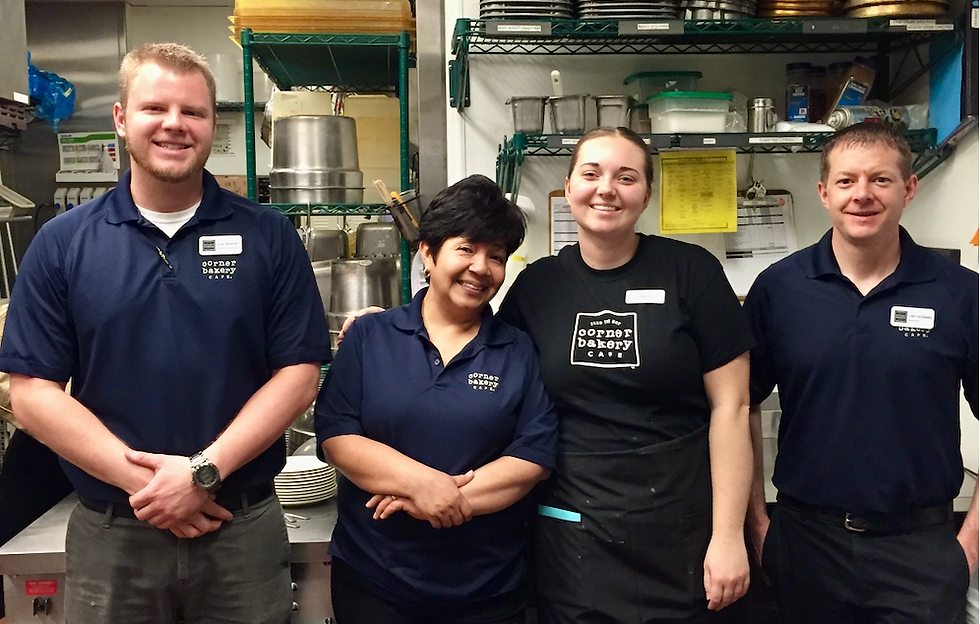
One of the cooks, Marie, looked at me with a huge smile and said: "Happy Wednesday!"
We both started laughing. She wasn't commenting on operations. She wasn't asking about sales. She was helping reset the energy of the room.
She understood something every experienced leader eventually learns: When the leader gets stressed, everyone gets nervous.
Sometimes people work harder. Most of the time, they start making mistakes:
Communication gets worse.
Problems stay hidden longer.
People become more reactive.
The entire organization feels it.
But calm spreads too. So does trust. So does resilience.
Stronger Leaders Build Stronger Restaurants
When restaurant operators reach out to me, they’re usually looking for solutions to a specific problem:
Sales are down
Operations feel chaotic
Turnover is high
A manager isn’t performing
Maybe the owner feels like every decision still runs through them.
Over the years, I’ve helped restaurants improve systems, launch catering programs, increase sales, build management teams, and solve operational challenges. I’ve come to realize that systems were never the real value. The systems helped teams execute consistently.
The real value came from the leadership skills behind them:
How to stay calm when things go wrong
How to have difficult conversations
How to set expectations and hold people accountable.
When to coach and when to draw a boundary.
Learning how to make decisions that protect both the team and the business.
Learning from when I got it wrong: the mistakes, the difficult conversations, the failed hires, the moments I handled poorly.
I can’t build a system that prevents every challenge you’ll face. No one can.
What I can do is help you become the kind of leader who can navigate those challenges with confidence, professionalism, and grace.
Restaurants don’t improve when a spreadsheet improves. They improve when the people leading them improve. Your team can’t level up unless you do.
When leadership grows, everything else tends to follow.
Ready to Level Up?
If this resonates with you, you’re probably not looking for another generic consulting program.
You’re looking for perspective, accountability, and support from someone who has spent decades leading teams, navigating challenges, and building restaurants.
If you’re ready to become the leader your restaurant needs, I’d love to help.
About the Author:
Colby Behrends is the founder of Noble Restaurant Success and a restaurant operator with over two decades of experience leading teams, improving operations, and helping businesses grow.
Throughout his career, he has managed high-volume restaurants, developed leaders, launched catering programs, and guided operators through some of the industry’s toughest challenges.
Today, Colby works with independent restaurant owners and operators to strengthen leadership, build healthier teams, and create businesses that don’t depend on one person to succeed.


Comments